
Oral History
Brittany Ramirez
Life in the Coastal Bend
About this interview
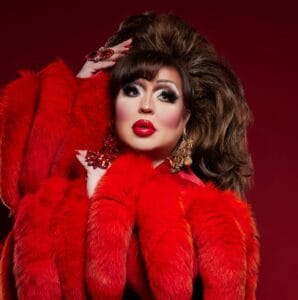
Brittany Ramirez was born an entertainer, entering the LGBT scene at fifteen in the vibrant late-1980s South Texas community. Dancing backup for local queens during the aftermath of the AIDS crisis, she won South Texas Newcomer in 1991, transitioned in 1993, and legally changed her name in 1994 under Ann Richards' administration—one of the first trans women in the Coastal Bend to do so. After years living stealth, she returned to performing in 1999, missing her community. Her biggest regrets center on the dangerous underground body modifications and survival work that characterized her rushed transition in an era of employment discrimination and isolation. Inspired by advocate Kitana Sanchez, Brittany transformed her voice into activism, co-founding Coastal Bend Trans Alliance in 2016 and organizing the pivotal Pulse vigil that brought over five hundred people together. Now fifty-three and still performing, she creates pageants for newcomers, supports trans youth and their families, and works across disadvantaged communities. Her legacy, built over thirteen years of advocacy, focuses on helping others avoid her mistakes while inspiring hope through perseverance.
Highlights
- 0:03–0:54
Brittany Ramirez introduces herself and describes coming out from the womb, expressing herself as an entertainer from childhood, with family support, and entering the LGBT scene at age fifteen.
- 0:54–4:05
Brittany describes the vibrant LGBT scene in the late 1980s and early 1990s, including hanging out at the sea wall, meeting people from small towns, gay rodeos, pageants with many contestants, and strong community unity despite lack of technology.
- 4:05–5:15
Brittany recalls dancing backup for local queens like Victoria West and Ashley Everett in 1989-1991, notes the community was coming off the AIDS epidemic panic, and reflects on being fifty-three and still performing.
- 5:15–7:31
Brittany describes the venue landscape when she came out, including The Top Hat, The Parallel (later Connect), and The Hidden Door, noting that The Hidden Door did not allow drag queens until 2006-2007, and praising owner Jim Brown and current owner Bill Williams for supporting grassroots organizations.
- 7:31–9:44
Brittany explains how performing led her to learn makeup and hair backstage, winning South Texas Newcomer in 1991, transitioning in 1993, legally changing her name in 1994, and working a nine-to-five job outside the club scene for some time.
- 10:16–13:30Activism Kitana Sanchez Coastal Bend Trans Alliance Be Human concert Coastal Bend Wellness Foundation
Brittany credits trans advocate Katana Sanchez with teaching her to use her voice for advocacy, leading to organizing the Be Human concert, donating proceeds to Coastal Bend Wellness Foundation, and starting Coastal Bend Trans Alliance in January 2016 as a support group for trans individuals, youth, and parents.
- 13:30–15:59
Brittany discusses creating the Miss Latina pageant seventeen years ago for Latin community representation and the Miss Corpus Christi Sweetheart contest for newcomers, emphasizing merit-based judging and building sisterhood among contestants from small towns who supported each other despite competing.
- 15:59–17:21
Brittany names influential performers including Ashley Everett, Jasmine SX, Victoria West, Melissa Michaels, Nina Rogers, and legendary entertainers like Miss Gay USA, Tommy Ross, Sweet Savage, and Tasha Cole brought by the Super Sunday show, highlighting Crystal Star as the best performer she ever saw.
- 17:21–18:41
Brittany recalls watching the 1980 Female Impersonation of the Year pageant on television at age eight, seeing performer Michael Andrews do Ann-Margret, which inspired her stage name and desire to perform, and describes practicing at home with support from her seamstress grandmother.
Explore these topics
Interested in one of these? Tap a topic to find other interviews that touch on it.