
Topic
transition
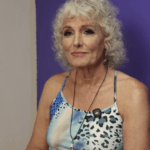
Vanessa Edwards Foster
A Life of Advocacy
Vanessa Edwards Foster introduces herself and the interviewer explains the unedited oral history format, setting expectations for the interview.
Vanessa Edwards Foster
A Life of Advocacy
Vanessa Edwards Foster describes realizing her transgender identity in the 1960s, discovering the word 'transsexual' through Renee Richards in 1976, attending Fantasia Fair in Provincetown in the early 1980s, and her initial transition attempts in Houston in the late 1980s and 1990s.
Vanessa Edwards Foster
A Life of Advocacy
Vanessa Edwards Foster describes accessing hormones from Dr. Anthony in Houston without requiring letters, experiencing rapid feminization that led to job loss in 1996, and being unable to afford legal name and gender change at the time.

Donna Blaze Johnson
Life from 1970s to Early 2000s
Donna reflects that if she were young today she might have transitioned given her male identity as a child, but AA taught her self-love, and she now deals with bathroom harassment as a butch woman.

Brittany Ramirez
Life in the Coastal Bend
Brittany Ramirez describes survival work in the 1990s as the only available employment during transition, detailing how she used income from modeling and websites to legally change her name and help her grandmother.
Brittany Ramirez
Life in the Coastal Bend
Brittany describes transitioning in 1994 under Ann Richards' administration, when policy changes allowed legal name changes for trans people, making her possibly one of the first in the Coastal Bend to live openly as a woman.
Brittany Ramirez
Life in the Coastal Bend
Brittany explains how performing led her to learn makeup and hair backstage, winning South Texas Newcomer in 1991, transitioning in 1993, legally changing her name in 1994, and working a nine-to-five job outside the club scene for some time.
Brittany Ramirez
Life in the Coastal Bend
Brittany recalls how national media in the late 1990s—from Jerry Springer to National Geographic documentaries—sparked mainstream curiosity about drag and trans identities, helping unify the community despite some sensationalist coverage.
Brittany Ramirez
Life in the Coastal Bend
Brittany describes growing up Catholic and initially believing people should wait until 18 to transition, but after meeting trans youth in a support group—two suicide-attempt survivors who became college graduates—she changed her view and now advocates for youth support.
Brittany Ramirez
Life in the Coastal Bend
Brittany hopes her legacy is one of hope and inspiration, urging people to avoid illegal body modifications and self-medication, and recounts living stealth from 1996 to 1999 before returning to performance in 1999.
Brittany Ramirez
Life in the Coastal Bend
Brittany's biggest regret is rushing her transition through underground silicone and self-medication; she now empowers people to access legal medical care and safer survival work, noting that modern technology offers employment opportunities that reduce the need for risky choices.