
Oral History
Brittany Ramirez
Life in the Coastal Bend
About this interview
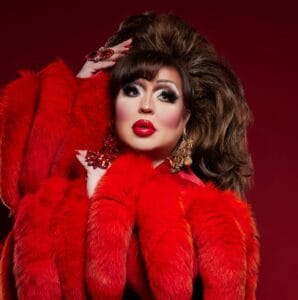
Brittany Ramirez was born an entertainer, entering the LGBT scene at fifteen in the vibrant late-1980s South Texas community. Dancing backup for local queens during the aftermath of the AIDS crisis, she won South Texas Newcomer in 1991, transitioned in 1993, and legally changed her name in 1994 under Ann Richards' administration—one of the first trans women in the Coastal Bend to do so. After years living stealth, she returned to performing in 1999, missing her community. Her biggest regrets center on the dangerous underground body modifications and survival work that characterized her rushed transition in an era of employment discrimination and isolation. Inspired by advocate Kitana Sanchez, Brittany transformed her voice into activism, co-founding Coastal Bend Trans Alliance in 2016 and organizing the pivotal Pulse vigil that brought over five hundred people together. Now fifty-three and still performing, she creates pageants for newcomers, supports trans youth and their families, and works across disadvantaged communities. Her legacy, built over thirteen years of advocacy, focuses on helping others avoid her mistakes while inspiring hope through perseverance.
Highlights
- 0:00–2:42
Brittany recalls her first dress—an orange velour gown made from her grandmother's curtains, sewn by her best friend Ashley—as a symbol of identity and family support.
- 2:42–4:59
Brittany describes transitioning in 1994 under Ann Richards' administration, when policy changes allowed legal name changes for trans people, making her possibly one of the first in the Coastal Bend to live openly as a woman.
- 4:59–5:57
Brittany reflects on 26 years of work with Texas Riviera Empire and 10 years co-founding the Coastal Bend Trans Alliance with Kitana, emphasizing perseverance and community support despite obstacles.
- 5:57–6:39
Brittany discusses how technology increases visibility but also creates risk, noting that while the community is stronger now, trans women face danger from a hostile political administration.
- 6:39–9:00
Brittany describes working with city officials to bring an LGBT proclamation to Robstown, emphasizing that engaging with warmth and humanity—rather than centering only on identity—opens doors and changes hearts.
- 9:00–9:43
Brittany shares how she stays positive by entertaining, surrounding herself with supportive people, and working to ensure everyone—especially disadvantaged youth—is safe and loved.
- 9:43–11:12
Brittany explains that in the late 1980s and early 1990s, gay men, drag queens, and trans women were divided and unwelcoming to each other, but by 2000 the community had united and begun celebrating one another.
- 11:12–12:45
Brittany recalls how national media in the late 1990s—from Jerry Springer to National Geographic documentaries—sparked mainstream curiosity about drag and trans identities, helping unify the community despite some sensationalist coverage.
- 12:45–14:50
Brittany describes growing up Catholic and initially believing people should wait until 18 to transition, but after meeting trans youth in a support group—two suicide-attempt survivors who became college graduates—she changed her view and now advocates for youth support.
- 14:50–16:36
Brittany remembers the Loving Spoonful—a group of women who fed and sheltered people with HIV/AIDS when families and employers rejected them—as the precursor to the Coastal Bend Wellness Foundation, which continues vital work today.
- 16:36–18:21
Brittany discusses working with early Coastal Bend AIDS Foundation advocates Matt Stevens and Laura Yates, praising their ongoing community work and the evolution of Pride Corpus Christi into year-round visibility and advocacy.
- 18:21–22:02Activism Pride Corpus Christi evolution 2016 Orlando vigil Nelda Martinez Mark Gonzalez pandemic impact
Brittany recounts joining CCLGBT in May 2016 and, after the Orlando Pulse shooting, organizing a vigil with Mayor Nelda Martinez and DA Mark Gonzalez that drew over 500 people, leading to the first Pride downtown in June 2016 and the eventual founding of Pride Corpus Christi as a nonprofit.
- 22:02–24:11
Brittany describes the Coastal Bend Trans Alliance's year-round work supporting trans individuals and families, including Trans Day of Remembrance and Visibility events, and highlights Evangeline Reyes's Trans Visionary program helping formerly incarcerated and struggling trans people.
- 24:11–24:49
Brittany reflects on working with affirming churches like All Saints, Unitarian Universalist, and Grace Church, noting that despite learning later that some people disliked her personally, she prioritizes the mission over ego, focusing on youth empowerment and future advocacy.
- 24:49–26:54
Brittany hopes her legacy is one of hope and inspiration, urging people to avoid illegal body modifications and self-medication, and recounts living stealth from 1996 to 1999 before returning to performance in 1999.
- 26:54–29:01Drag & Pageantry transition underground silicone survival work name change employment discrimination violence against trans women law enforcement indifference vocational training
Brittany's biggest regret is rushing her transition through underground silicone and self-medication; she now empowers people to access legal medical care and safer survival work, noting that modern technology offers employment opportunities that reduce the need for risky choices.
- 29:01–29:02
Brittany's greatest accomplishment is her perseverance—remaining relevant after over 30 years in entertainment, now at the height of her career thanks to mentors who believed in her.
Explore these topics
Interested in one of these? Tap a topic to find other interviews that touch on it.